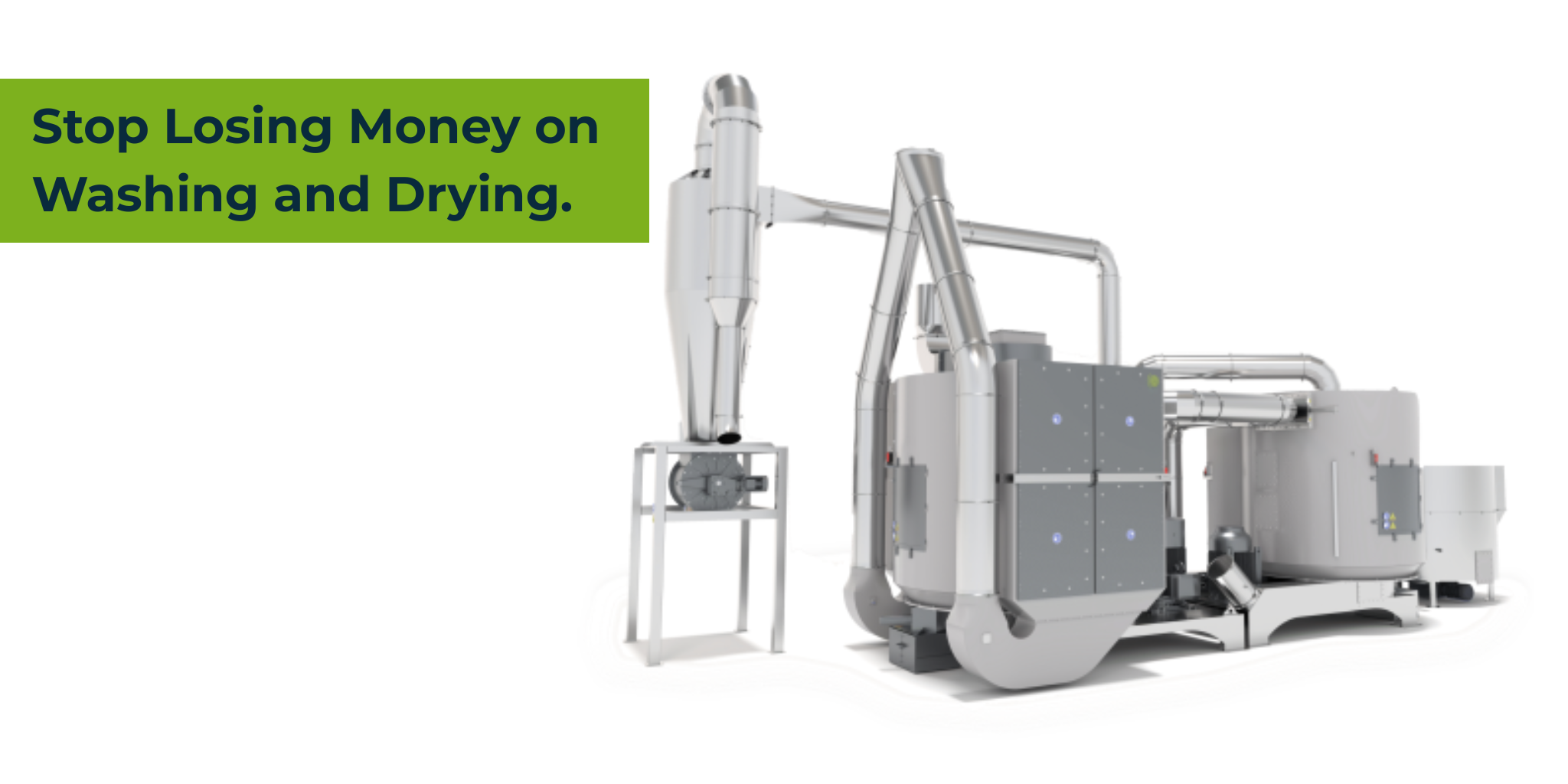
Film recycling is one of the most challenging segments in plastics processing.
The combination of contamination, moisture, and low-density material creates instability throughout the entire process chain.
Traditional washing systems attempt to solve this problem but introduce new challenges:
– high water consumption
– energy-intensive drying
– complex plant layouts
– rising operating costs
As a result, many recycling operations face high OPEX and limited scalability.
A more advanced approach focuses on stabilizing the material before extrusion.
This typically combines two key process steps:
- Dry cleaning (e.g. DRD)
Removal of dust, sand and moisture without water - Material densification and homogenization (PreDensifier)
– volume reduction
– moisture reduction
– stable and continuous feeding
– thermal preparation of the material
The result:
– more stable processes
– reduced downtime
– lower operating costs
– simplified plant design
The industry is shifting from water-intensive cleaning
towards integrated process stabilization.
And this shift will define competitiveness in film recycling.